
AI Voice and Video Avatar Platforms in 2026: A Pricing Benchmark for Founders and CTOs
A practical pricing breakdown of the five most-used AI voice and video avatar platforms — Bland AI, Retell AI, HeyGen, Synthesia, and Tavus — based on RudraX's vendor benchmarking work. What you actually pay, what you don't see in the public pricing page, and how to choose the right one for your use case.
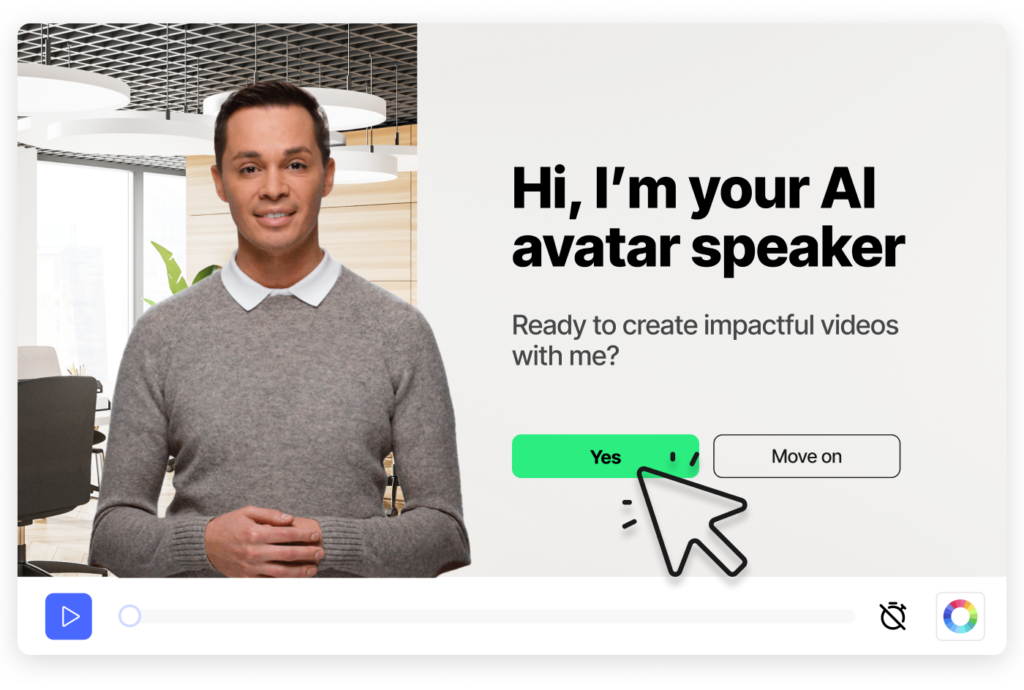
Artificial Intelligence (AI) voice and video avatar platforms are software systems that generate human-like speech, conversational responses, or photorealistic talking-head video using large language models, neural text-to-speech, and generative video models. They sit at the centre of a category that barely existed three years ago and now powers everything from customer support and outbound sales to government welfare delivery and corporate training.
We get the same question every week from founders and Chief Technology Officers (CTOs): "What does it actually cost to put one of these into production?"
The answer most vendors give you on their pricing page is not the answer you need. So we did the work. This is RudraX's benchmark of the five platforms we evaluate most often when scoping client engagements — including the real costs that don't appear in the marketing copy.
Why this matters now
Two trends collided in 2025. Voice agents stopped sounding robotic — latency dropped below 800 milliseconds end-to-end, which is the threshold at which a human stops noticing they're talking to a machine. And video avatars stopped looking uncanny — lip-sync, micro-expressions, and head movement crossed the line from "obvious AI" to "unless you're looking for it, you don't see it."
The result is that the build-versus-buy question genuinely matters again. Three years ago, you couldn't buy a usable voice agent at any price; today you can, and the question is which one and at what total cost.
The five platforms we benchmarked
These are not the only options on the market. They are the five that come up in 80% of our client conversations, and the ones we have actually deployed.
Bland AI and Retell AI sit in the voice agent category — phone-call-grade conversational AI for sales, support, and outbound campaigns. Both are pay-per-minute, both expose Application Programming Interfaces (APIs) for telephony integration, and both are aimed at developers building production voice systems.
HeyGen and Synthesia sit in the video avatar category — generate a talking-head video from a script, with a library of stock avatars or a custom-trained one of yourself. Synthesia is the enterprise-incumbent (large training and corporate communications customer base); HeyGen is the developer-friendly newer entrant with a strong API.
Tavus sits in a third category we'd call real-time interactive video avatars — not pre-rendered videos but a live two-way conversation with a video avatar over a WebRTC connection. This is a fundamentally different product, and the pricing reflects it.
The pricing reality (verify before quoting clients)
The figures below are indicative ranges based on our benchmarking as of early 2026. Always confirm directly with the vendor before committing — pricing on this category moves monthly and enterprise quotes vary widely from list pricing.
| Platform | Category | Entry tier (approx.) | Production tier (approx.) | Pricing model |
|---|---|---|---|---|
| Bland AI | Voice agent | From $0.09–$0.12 per minute | Volume discounts at scale | Per minute |
| Retell AI | Voice agent | From $0.07–$0.10 per minute | Custom enterprise pricing | Per minute |
| HeyGen | Video avatar | ~$24/month (Creator) | $89+/month (Team), API metered | Subscription + API credits |
| Synthesia | Video avatar | ~$22/month (Starter) | Custom enterprise from ~$1,000+/year | Subscription, mostly annual |
| Tavus | Real-time video | API-metered, ~$0.10–$0.15 per conversational minute | Custom enterprise | Per minute |
Treat this as the starting point of the conversation, not the end of it.
The costs you don't see on the pricing page
This is where most build-versus-buy analyses go wrong. The vendor's per-minute rate is rarely your actual unit economics.
Telephony costs. For voice agents specifically, you are paying twice — once to the AI vendor for the agent, and once to a telephony provider (Twilio, Telnyx, or similar) for the carrier minutes. Add roughly $0.013–$0.025 per minute on top of the agent cost depending on your country mix.
Large Language Model (LLM) inference. Most voice agent platforms charge for the agent's runtime infrastructure but pass through the cost of the underlying language model. A heavy GPT-4-class workload can add another $0.02–$0.06 per minute. Cheaper models exist, but quality drops fast on complex conversations.
Custom avatar training. Both HeyGen and Synthesia charge for creating a custom avatar of a specific person — typically a one-time fee plus an ongoing premium. Budget $500–$3,000 for the initial creation depending on the level of fidelity and licensing terms.
Voice cloning. Cloning a specific person's voice (rather than using a stock voice) is a separate line item on most platforms, with both per-clone and per-character generation fees.
Compliance and review. This one nobody talks about. If your avatar represents a regulated entity — a bank, a healthcare provider, a government department — you will spend real money on legal review, compliance sign-off, and ongoing content moderation. We've seen this add 10–30% to the total project cost in regulated sectors.
Integration engineering. None of these platforms ship with your stack. Expect 4–12 weeks of engineering work to integrate a voice agent into a real Customer Relationship Management (CRM) workflow, telephony provider, knowledge base, and observability layer. At our rates, that's a five-figure addition to any production deployment.
How to choose between them
There is no single "best" platform. The right choice depends almost entirely on what you are actually building.
If you need outbound or inbound phone calls at scale — Bland AI and Retell AI are the two real contenders. Bland leans toward marketing and sales use cases with simpler workflow tooling. Retell exposes more granular control and is favoured by teams building complex multi-step support flows. Pick Bland for speed-to-market, Retell for engineering control.
If you need pre-rendered training, marketing, or internal communication videos — Synthesia is the safer enterprise choice (better governance, better compliance posture, larger avatar library). HeyGen is the better developer choice (cleaner API, faster iteration, lower price floor). Pick Synthesia if your buyer is a Learning and Development team. Pick HeyGen if your buyer is a product team integrating video into a workflow.
If you need a live, two-way video conversation with an avatar — Tavus is essentially the only mature option in this category right now. The use cases are narrow but high-value: digital concierges, branded virtual presenters, personalised onboarding flows. Expect to pay for it.
If you need something that sits across all three categories — and this is increasingly common in enterprise government and healthcare engagements — you are now in custom-build territory and should talk to an agency.
What we'd recommend, depending on where you are
- Pre-Minimum Viable Product (MVP), validating an idea: start with HeyGen or Bland AI. Both have low friction, and you can be in production within days.
- Series A or growth-stage, scaling a real use case: the per-minute economics start to matter. Run a one-week benchmark across two competing platforms with your actual call volume and content before committing.
- Enterprise, regulated, or government: the platform choice is secondary to the integration, compliance, and governance work. Budget accordingly. The vendor selection might only be 15–20% of the total cost.
What we built with this category
We've used these platforms — and built bespoke alternatives — across several recent engagements. Our SevaMitra project for the Jharkhand state government uses an AI video avatar to deliver welfare scheme information to rural users in their own language. Our work with Chanakya IAS Academy uses voice and conversational AI inside a learning management workflow. And in our internal labs we've benchmarked these vendors against custom builds on open-source foundations — sometimes the buy-side wins, sometimes the build-side does.
The honest answer is that the category is moving so fast that any benchmark is out of date within a quarter. What stays true is the framework: list price plus telephony plus inference plus customisation plus integration plus compliance equals total cost of ownership. Anyone selling you on the list price alone hasn't shipped one of these into production.
Frequently Asked Questions
How much does an AI voice agent cost per call?
A typical 5-minute customer service call on a production-grade AI voice agent costs roughly $0.45–$0.90 in direct platform fees, before adding telephony costs ($0.07–$0.13) and Large Language Model inference ($0.10–$0.30). Total all-in cost per 5-minute call is typically in the $0.65–$1.30 range, depending on platform choice and conversational complexity.
Is it cheaper to build your own voice agent than to use Bland AI or Retell AI?
For most teams under 500,000 minutes per month, no. The engineering cost of building, hardening, and maintaining a production voice agent — including telephony integration, latency optimisation, and ongoing model tuning — exceeds the platform fees you would pay. The break-even point is typically somewhere between 500,000 and 2 million minutes per month, after which custom builds start to win on unit economics.
Which AI video avatar platform has the most realistic output in 2026?
Quality is now close enough across HeyGen, Synthesia, and Tavus that the differentiator is rarely realism alone — it's the workflow around the avatar (governance, integration, custom training, compliance posture). Run a side-by-side test with your actual script and your actual avatar before deciding.
Can AI voice agents handle compliance requirements like the General Data Protection Regulation (GDPR) or Health Insurance Portability and Accountability Act (HIPAA)?
Some can. Bland AI, Retell AI, and Synthesia offer enterprise tiers with the appropriate data processing agreements and security certifications. The key questions to ask any vendor: where is the inference happening (data residency), how long are call recordings stored, can you opt out of model training on your data, and do they support self-hosted or Virtual Private Cloud (VPC) deployments. The answers vary materially across vendors.
How long does it take to deploy an AI voice or video avatar in production?
A pilot deployment can be live in 1–2 weeks. A full production system integrated into an existing CRM, telephony stack, knowledge base, and observability layer typically takes 6–12 weeks for a focused team. Regulated industries (finance, healthcare, government) routinely run longer due to compliance review cycles.
This benchmark reflects RudraX's vendor evaluation work as of early 2026. Vendor pricing and capabilities change frequently — confirm current details with each provider before making procurement decisions. If you'd like to discuss your specific use case, start a conversation.
Last updated: 25th April 2024
Related reading

Agentic AI in Production: 3 Engineering Patterns That Repeatedly Fail and 3 That Consistently Work
Everyone is talking about AI agents. Very few are talking about what happens after deployment. The difference between a spectacular demo and a production-ready AI system isn't the language model. It's the engineering architecture around it. Drawing from industry guidance and real-world product delivery, this article explores six engineering patterns that repeatedly determine whether autonomous AI systems fail or scale.
6 min read

How Much Does an AI Voice Agent Cost in 2026? A Buyer's Breakdown
Wondering how much an AI voice agent costs in 2026? This buyer's guide breaks down development costs, ongoing expenses, pricing factors, and investment tiers from startup MVPs to enterprise AI ecosystems so you can budget confidently and choose the right AI development partner.
5 min read
Production AI for UK Fintech: What GDPR Adds to Your Roadmap
Artificial intelligence is transforming UK fintech, but success depends on more than powerful algorithms. GDPR compliance now shapes every stage of an AI product's lifecycle - from data collection and model training to deployment and monitoring. This article explores how fintech businesses can build production-ready AI platforms that balance innovation, security, transparency, and regulatory compliance while earning customer trust.
6 min read