
Mensa Alta: Building the Quiet Architecture of a Modern Society
The technology behind a private members society for alumni of Oxford, Cambridge, Stanford, the Massachusetts Institute of Technology (MIT), and the Ivy League — designed to be felt, not seen.
The challenge
The mandate was unusual.
A society conceived in the mould of the older private institutions — Oxford alumna founder, lineage echoing the candlelit halls of the thirteenth century, members drawn from Oxford, Cambridge, Stanford, the Massachusetts Institute of Technology (MIT), and the Ivy League — needed the digital architecture to operate as the modern equivalent. Not a website. Not a membership platform in the sense the term is usually understood. The infrastructure of a society that values discretion, ritual, and curation in roughly that order.
The technical brief was, in itself, simple. The brand brief was the difficult one. Most members-only software optimises for engagement metrics — log-ins per week, messages per member, content consumed per session. Mensa Alta optimises for the opposite. The right user experience is the one the member barely notices, because everything visible should feel as though it was always there.
What the platform needed to do was clear: present the society to the world with restraint, allow the right people to find their way to a waitlist, give the founder — known publicly only as the Countess — the tools to vet, admit, and manage members across an expanding constellation of chapters, and provide admitted members with a private space that operated as quietly as the society itself.
What the platform needed to feel like was the harder problem. The technology had to disappear into the brand. Anything that looked like software in the conventional sense — the conventions of the Software-as-a-Service (SaaS) era, the patterns of consumer applications, the visual idiom of typical membership platforms — would have undermined the entire premise.
Our approach
What we built operates across three surfaces, each calibrated to a different audience.
The public face. A single elegant marketing site at mensa-alta.com — the door, not the room. Restraint is the design principle. The home page asserts the society's existence and intent in a few sentences and offers one path forward: the waitlist. Heritage signals — the Latin etymology, the lineage references, the typographic choices — do their work without explanation. The site is the only signal of the society most of the world will ever see. It was designed accordingly.
The Countess's instrument. A private administrative platform, accessible only to the founder and a small circle of trusted operators. From it, applications can be reviewed individually, members admitted by personal invitation, chapters managed across geographies, code of conduct violations adjudicated discreetly, and the rhythms of the society — gatherings, invitations, correspondence — orchestrated as one unified workflow. The interface respects the brand: dark, typographically considered, free of the dashboard-and-widgets aesthetic that would feel out of place. It is the operational nerve centre of an organisation that does not advertise its operations.
The members' room. Once admitted, a member enters a private space that exists for them alone. Directory, chapter information, gathering details, member-to-member correspondence, and the quiet machinery of a society that prefers personal contact to digital broadcast. Privacy is architectural rather than configured. Members see only what they should see; the society's structure remains invisible to those who have not yet been invited into it.
The technical work was substantial. Identity, authentication, invitation flows, chapter-level access controls, encrypted messaging, the administrative workflows the Countess runs the society on, and the integration of the public-facing waitlist with the private admission process — all of it built to enterprise standards on infrastructure that does not announce itself. None of it visible from outside. None of it felt by the member.
The hardest decisions were the ones about what not to build. No public member directory. No engagement gamification. No "you may also know" suggestions. No analytics dashboards visible to members. No third-party tools embedded for the sake of feature parity with conventional platforms. Each absence was deliberate. Each absence is what the Countess pays us to defend.
The outcome
Mensa Alta is now operating quietly.
The waitlist receives the applications of people who found their way to the door — not from advertising, but from the network the society was designed to serve. Admissions are reviewed, members are admitted by personal invitation, and chapters are forming in the cities where members are concentrated. The platform supports all of this without making any of it visible to anyone who does not need to see it.
What we can say publicly, with the Countess's blessing, is that the engagement is ongoing and the platform is doing what it was built to do. The members who have been admitted experience a society that feels older than its software, and a software layer that feels younger than its membership. Both impressions are the result of deliberate choices.
What we cannot say is anything about who is admitted, how many, in which cities, or by what criteria the Countess admits them. Those are the society's to keep. We are the architects of the room. We are not the witnesses to the conversations that happen inside it.
That distinction is, in essence, the engagement.
Here is the link to a video testimonial
RudraX understood from the first conversation what the wrong vendor would have spent six months learning, if they ever learned it at all. The platform is invisible. That is the highest compliment I can pay the work.
— The Countess, Founder of Mensa Alta
Gallery
Scroll →
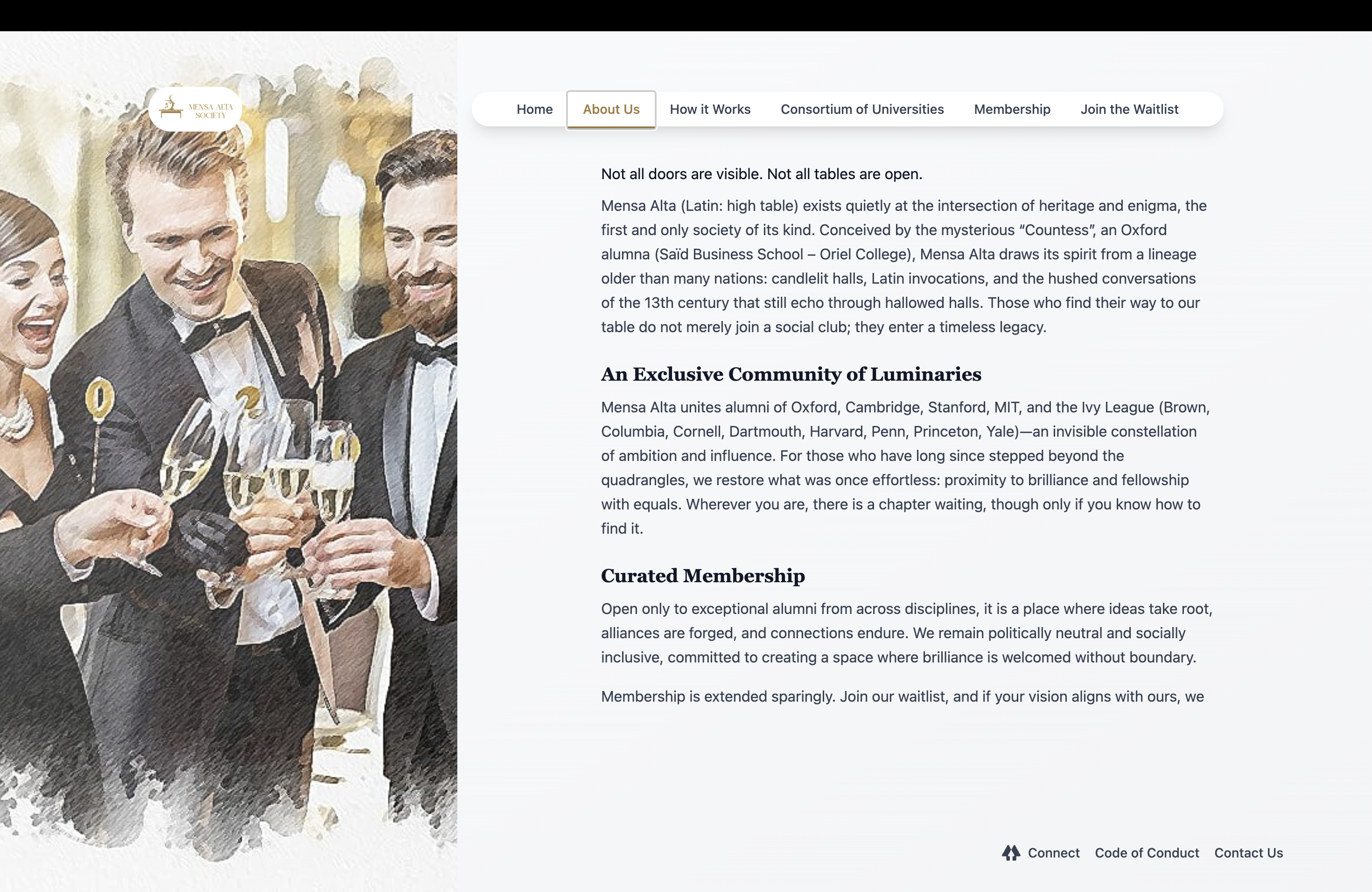 01 / 04
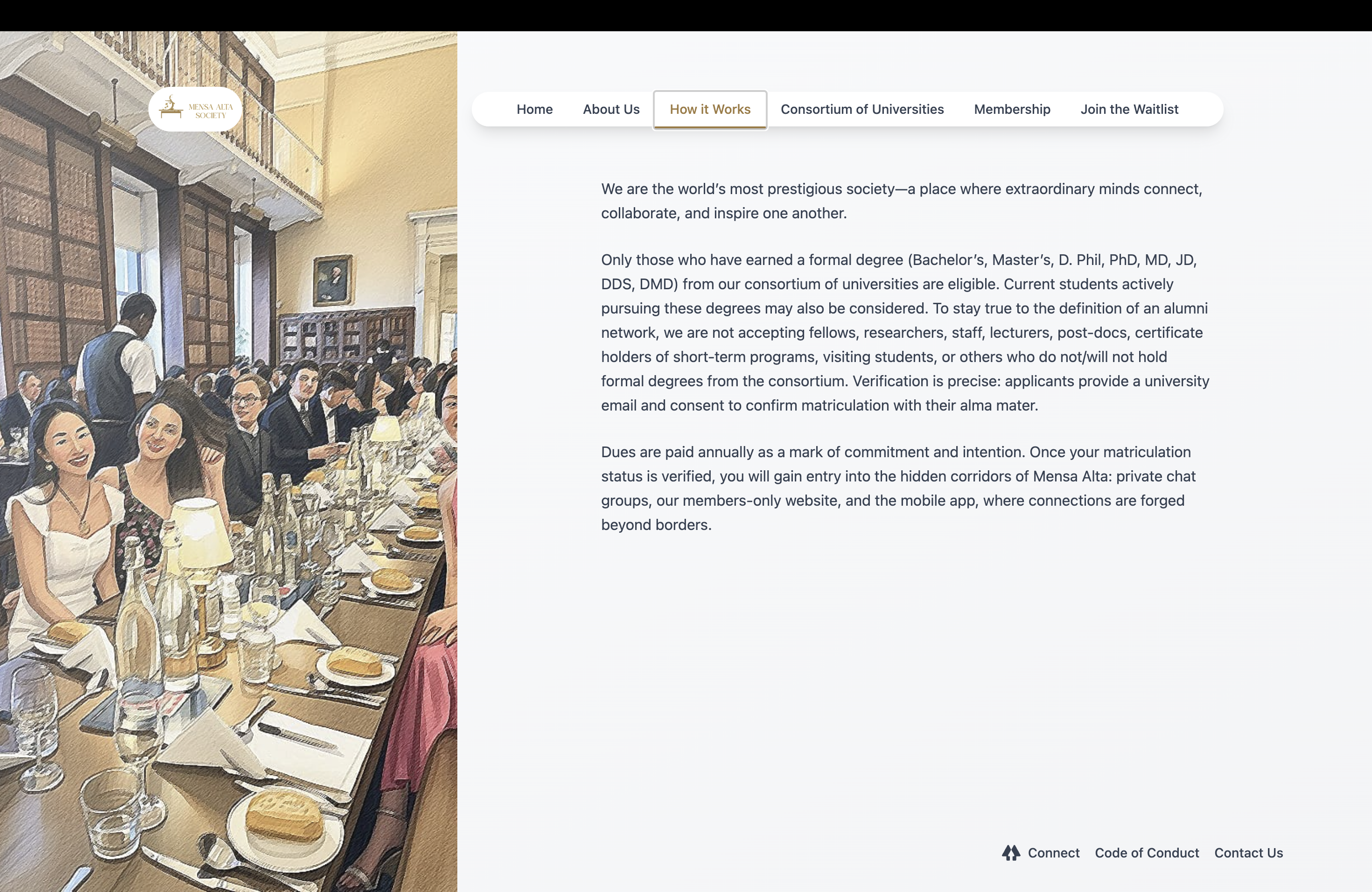 02 / 04
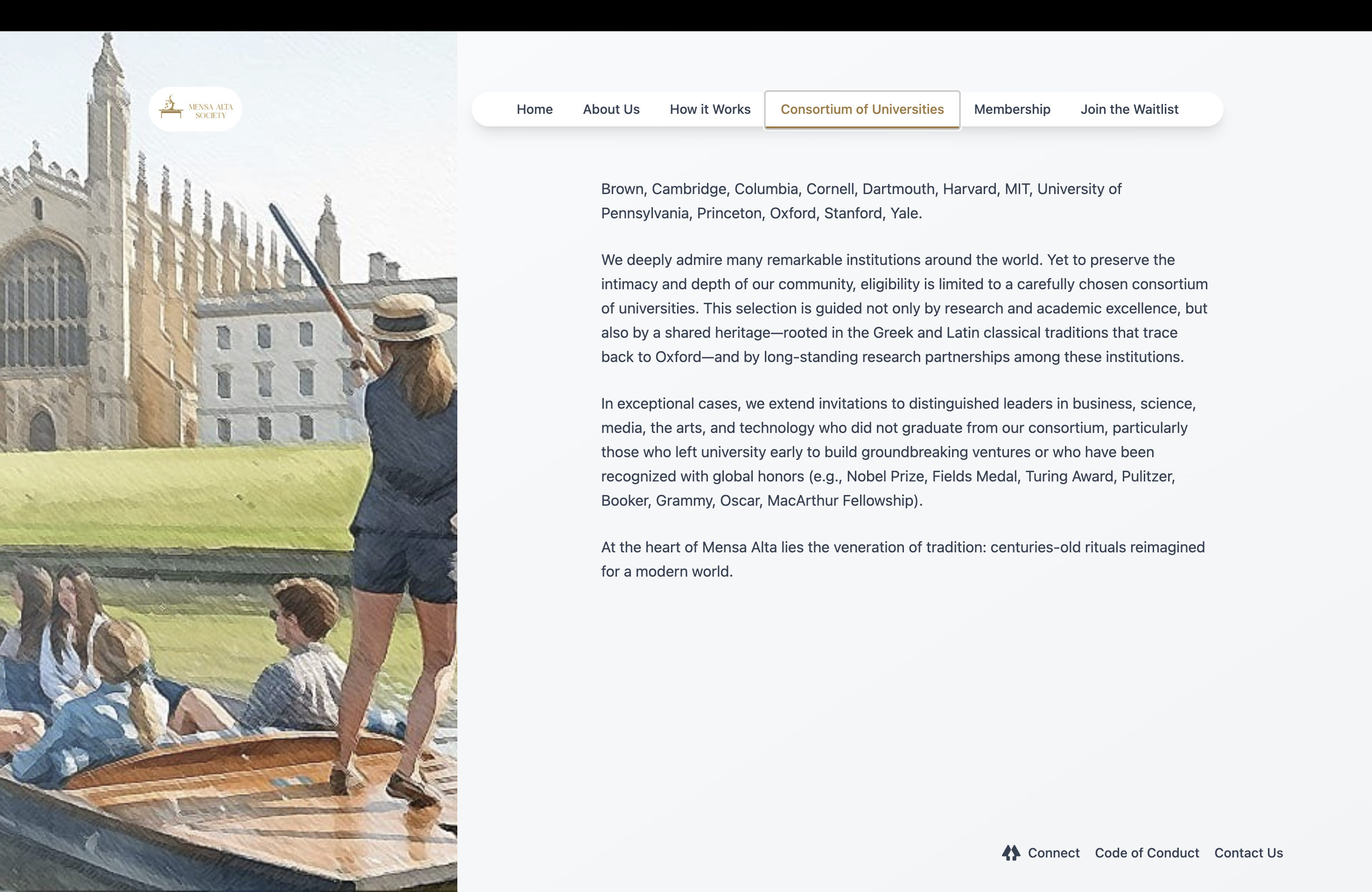 03 / 04
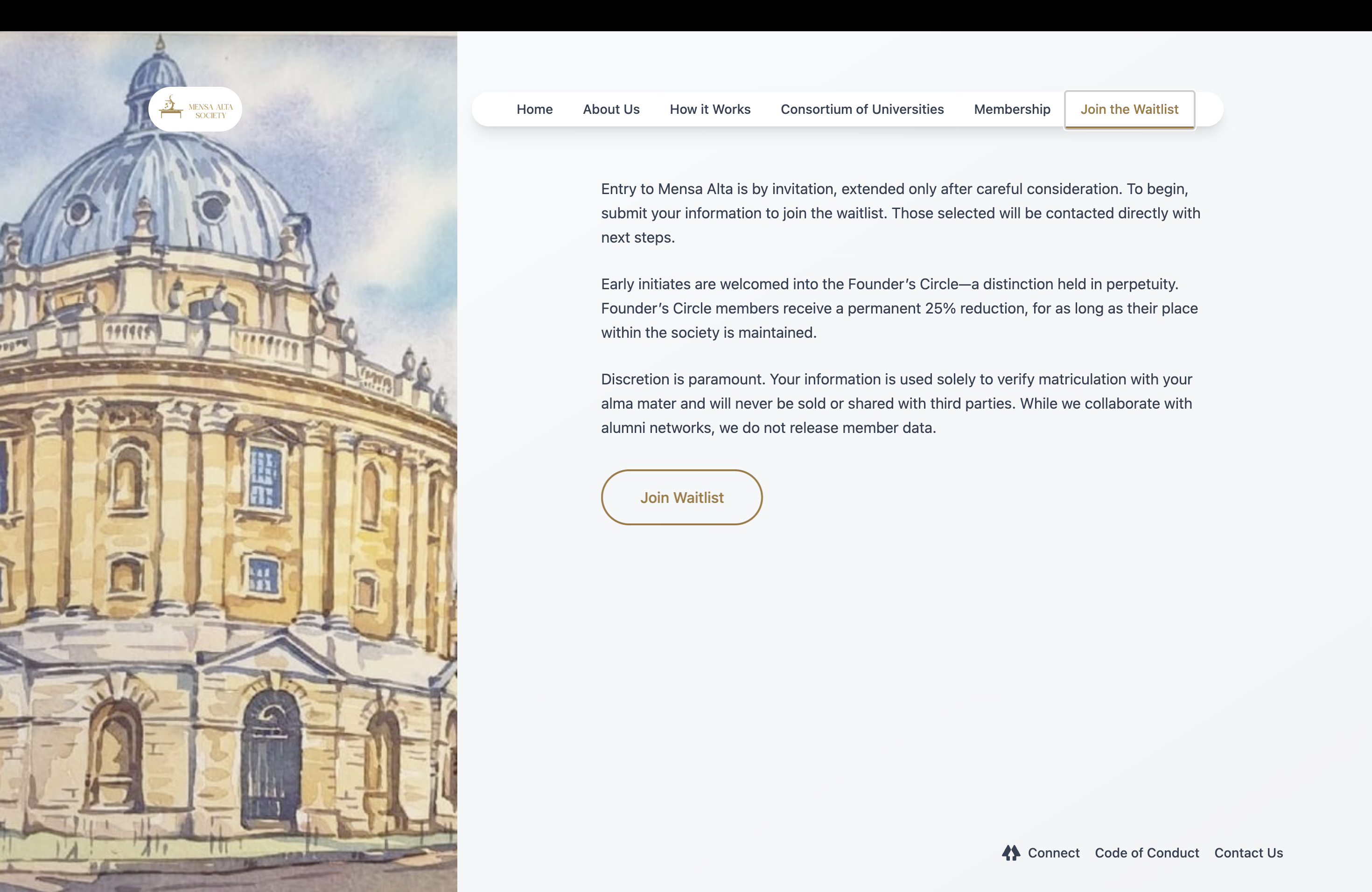 04 / 04
Have a similar problem to solve?
Book a free 30-minute intro call and we will walk through what a focused engagement could look like.
More work
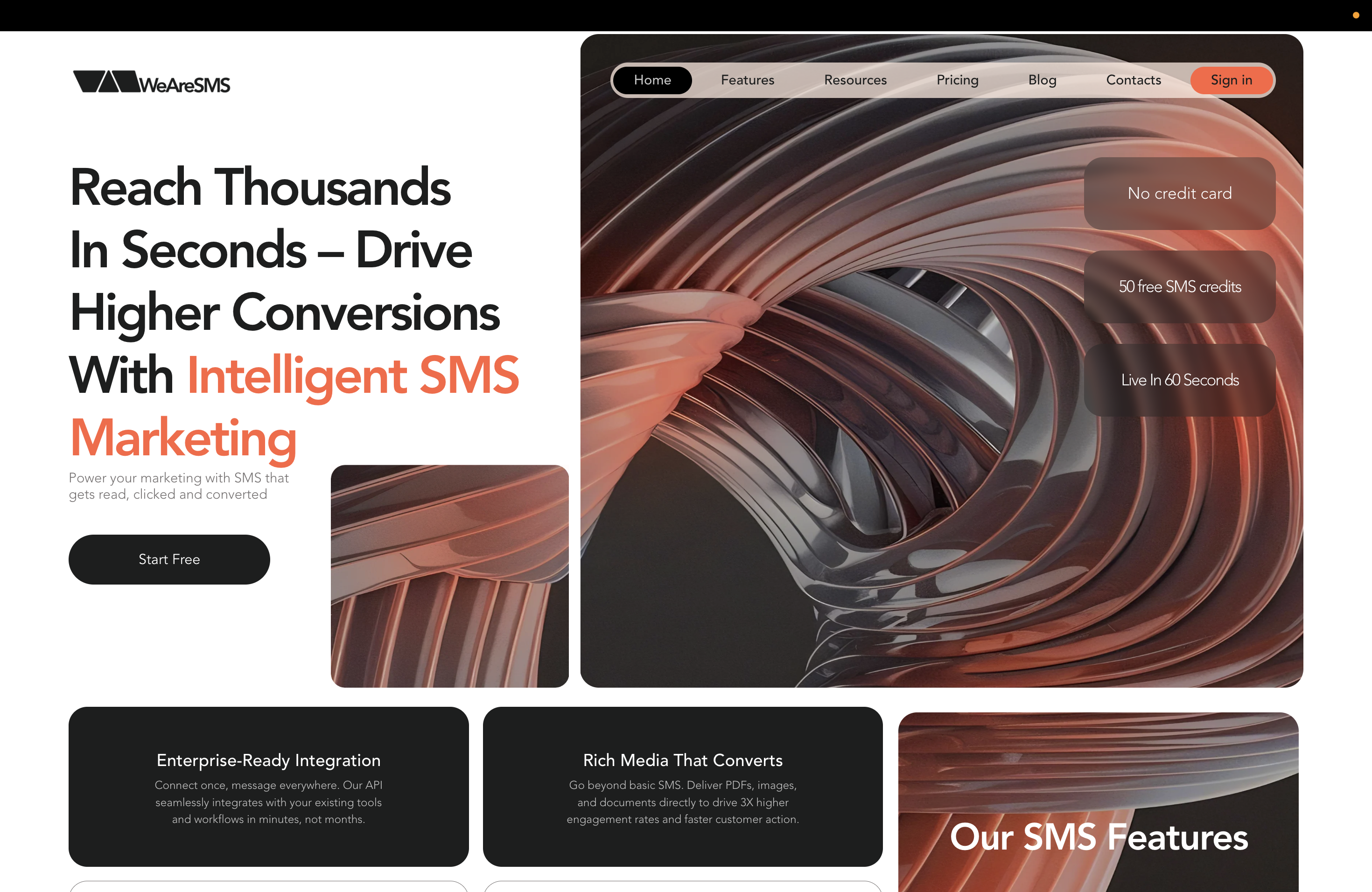
WeAreSMS
How RudraX Built WeAreSMS — A Self-Serve, Compliant Messaging Platform With Live Route Pricing and Enterprise-Grade Deliverability
Read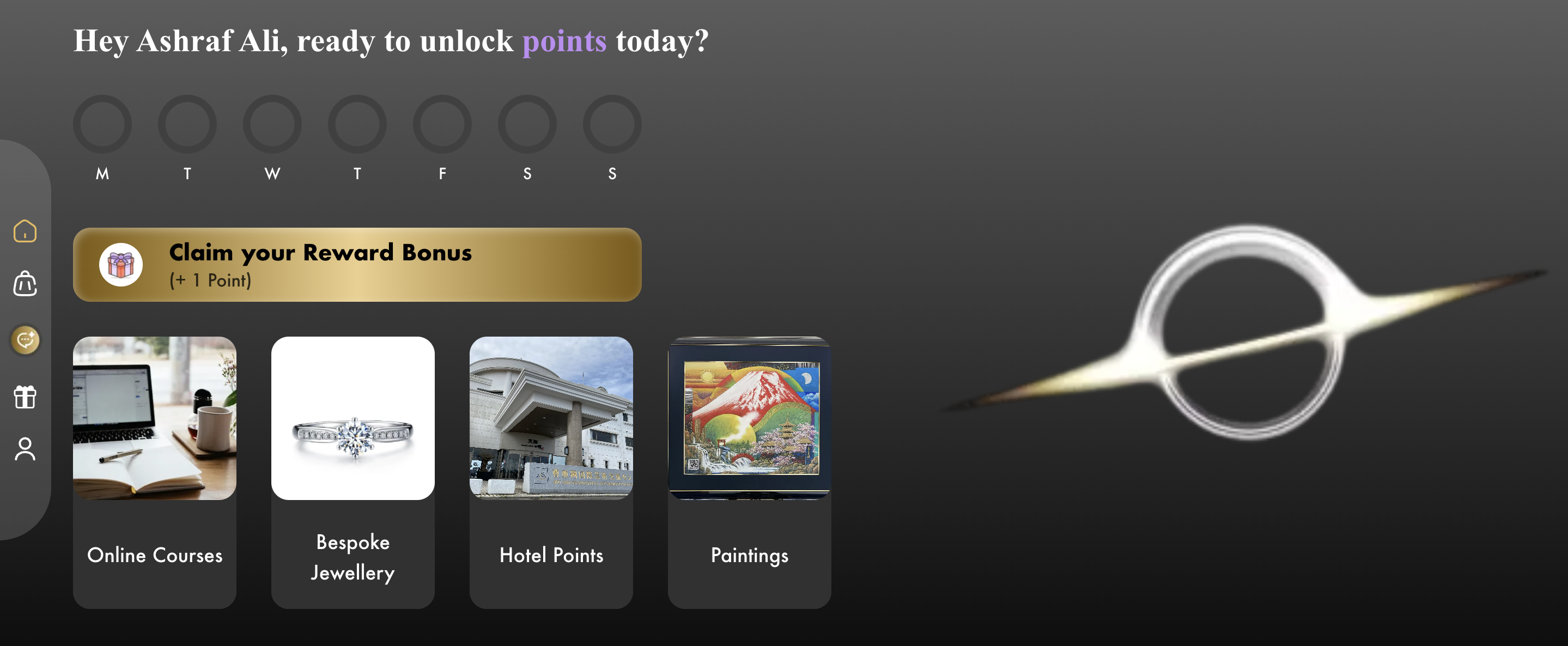
AIMine8
How RudraX Shipped AIMine8 in Three Months — A Web 3.0 Platform Combining Blockchain, Generative Artificial Intelligence (AI), and Multi-Region Infrastructure
Read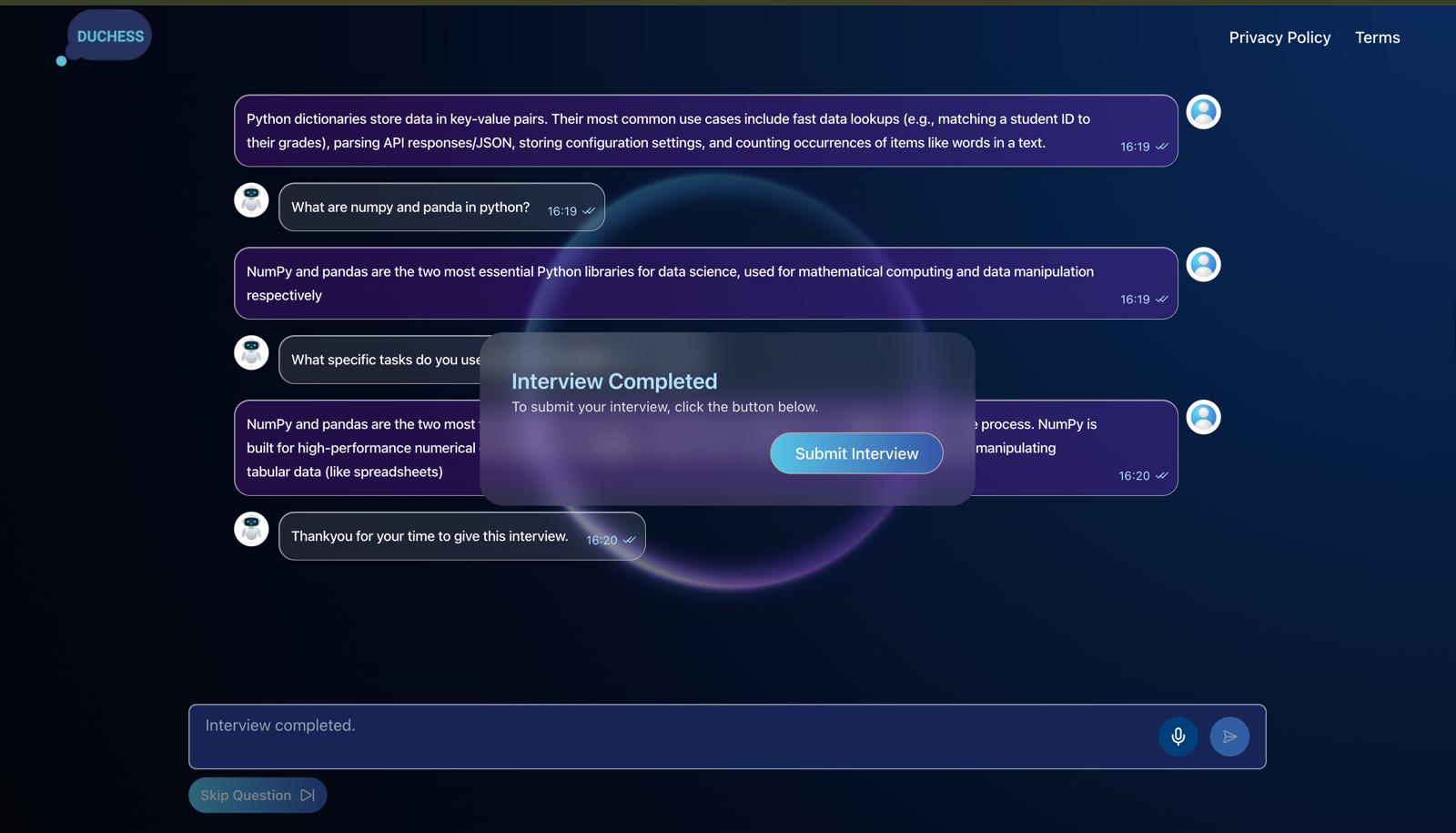
DIEM Analytics
How RudraX Rebuilt DUCHESS as a Commercial Software-as-a-Service Platform for DIEM Analytics — From Defence Innovation to Multi-Vertical AI
Read