
Why Your Business Is Failing — Part 4: Human Resources (And How the Series Ends)
The final part of the series. The Human Resources failure mode is the worst one — not because it costs the most money, but because it costs you the people who would have built the next version of your company. With references to Verdix and DUCHESS V3 — the AI hiring and interviewing platforms RudraX has built.

TL;DR
Mid-market companies are losing the talent war to Artificial Intelligence (AI)-native competitors across three specific Human Resources failure modes: recruiting funnels that reject 96% of candidates without a conversation while competitors deploy AI interviewing platforms that conduct structured conversations with every candidate, onboarding experiences that lose 30% of new joiner first-impression value while competitors deliver personalised AI-guided onboarding from day one, and internal mobility processes that the best employees opt out of while competitors proactively surface internal opportunities. RudraX has built production-grade platforms for two of the three — Verdix for end-to-end AI hiring and DUCHESS V3 for structured AI interviewing at defence scale.
Three weeks ago this series started with a sales team losing a deal at 9:47pm to a competitor's voice agent. Then operations bleeding 25% margin to invisible work. Then a finance function operating at 2015 capability while competitors operated at 2026 capability. This is the final instalment, and it's the worst one.
Why Your Business Is Failing — Part 4 of 4: Human Resources.
If you missed any: Part 1 — Sales & Marketing, Part 2 — Operations, Part 3 — Finance.
Why the Human Resources (HR) failure mode is the worst
Money you lose to a faster sales process can be made back next quarter. Margin you lose to an inefficient operations function can be recovered through pricing or restructuring. Decision quality lost in finance can be regained by hiring better analysts.
Talent you lose to a competitor cannot be recovered.
When your Artificial Intelligence (AI)-native competitor recruits the engineer, the operator, the leader who would have built the next version of your company — that person is gone. Not for this quarter. For their entire career arc that would have been spent inside your business. Multiplied across the 50 or 100 most important hires you should have made and didn't, and you don't have a hiring problem. You have a future problem.
The HR failure mode is the only one in this series where the cost is irreversible.
Failure mode 1: The recruiting funnel that loses 96% of candidates without a conversation
Your recruiting team processes, at a guess, 200 candidates per week across all open roles. They screen perhaps 40 against role requirements, interview 10, and hire 1 or 2. The other 198 receive a templated rejection email — or, more often, silence.
Those 198 people remember.
Some will be customers later. Some will be candidates again later, when they have grown into a more senior role. Some will be founders of companies that compete with yours. The signal you sent — "we did not have time for you" — compounds across thousands of people over years.
Your AI-native competitor's recruiting platform processes 5,000 candidates per week. Each one receives a structured AI-led interview tailored to the role, evaluated on competency and communication and culture fit, then a personalised follow-up that explains why they progressed or didn't, what other roles in the company might suit them better in 6 to 12 months, and whether the company would like to stay in touch.
The 4,990 candidates who don't progress are net-positive about the company. Some of them apply again later. Some refer friends. All of them have an experience that is better than 95% of the recruiting processes they have ever been through.
The cost of the agent system, once built, runs at marginal cost per candidate of pennies. The recruiting team's time is freed up for actual conversations with the 50 best candidates per week — not the 10 they currently get to.
This is the category of capability we have built into Verdix, our Artificial Intelligence-powered hiring intelligence platform. Verdix manages every step of the hiring journey autonomously — Curriculum Vitae sourcing and parsing across LinkedIn and Naukri, role-specific structured AI interviews, ranked auditable shortlists for hiring managers, native integration with Applicant Tracking Systems (ATS) and assessment platforms — purpose-built for enterprises hiring at volume without compromising on candidate quality. The platform is actively customised for enterprise deployment; we don't sell it as a generic Software-as-a-Service tool because the configuration work that makes AI hiring actually land in a specific organisation is the work that determines whether the deployment succeeds.
When we say RudraX has built the technology for this failure mode, we mean it specifically. Verdix is one of the two pieces of evidence in this series of how that statement is grounded in actual production work.
Failure mode 2: The onboarding experience that loses 30% of new joiner first impressions
Your new joiner onboarding is three weeks of cohort sessions, Portable Document Format (PDF) handbooks, Information Technology setup tickets, Human Resources forms, generic compliance training, and an introduction to the leadership team. By Week 2, the new joiner is bored. By Week 3, they are wondering if they made the right decision joining.
We have measured this pattern in client engagements: 30 to 40% of new joiner first-year retention is determined by the quality of the first two weeks. Companies with poor onboarding lose people in months 4 to 8 who would have stayed if the first two weeks had been better.
Your AI-native competitor's onboarding works fundamentally differently. Each new joiner gets a personalised onboarding experience — structured conversations that gather their actual concerns, expectations, prior experience, working preferences, and 90-day goals. The Information Technology setup is automated. The compliance training is condensed and interactive. The first conversation with their manager happens on Day 1, not Week 2, because everything that does not require human time has already been handled — and the manager arrives at that first conversation with a structured briefing on the new joiner that no traditional onboarding produces.
This is the territory we have built directly into in our work on DUCHESS V3 — the AI interviewing platform we rebuilt for DIEM Analytics, taking the Defence and Security Accelerator (DASA)-funded innovation from its NATO and Royal Navy deployments into a commercial Software-as-a-Service product. DUCHESS V3 was built for lessons-learnt interviews after defence operations. The same architectural patterns — structured conversations with intelligent follow-up generation, theme extraction, sentiment analysis, multi-tenant deployment — apply directly to new-joiner onboarding interviews. A platform built for NATO debriefings is also a platform built for understanding what your new hire actually thinks about their first month.
The point is not that RudraX uses DUCHESS V3 for onboarding (DIEM Analytics does not market it for this use case yet). The point is that the engineering capability behind production-grade AI interviewing is not theoretical at RudraX. We have shipped the platform at defence scale. The HR use case is structurally identical and considerably simpler. The companies who get this right are working with engineering partners who already understand what AI interviewing at scale actually requires.
Failure mode 3: The internal mobility most of your best people opt out of
Your internal mobility process lives somewhere on the company intranet. Most of your best employees do not engage with it because they do not know what they do not know — they cannot see which roles in adjacent functions might match their underlying skills, and they do not have time to investigate.
Your AI-native competitor's internal mobility is proactive. An agent watches every employee's actual skills (from their work output, from their training completion, from their project history), every employee's stated career goals, and every internal opportunity (open roles, secondments, project lead positions, training pathways). It proactively surfaces matches: "You have shown strong analytical work in your last three projects, you mentioned wanting more strategic responsibility, and there is a senior business analyst role opening on the strategy team that closes Friday. Your skills match 85% of the requirements. Here are the 15% you would need to learn. Here is the manager's calendar. Would you like to have a conversation?"
The result: internal mobility rates are 3 to 5 times higher than industry average. The company retains people who would otherwise have left, because their best people see growth paths they did not know existed. The company fills roles internally that would have cost £15,000 to £30,000 in recruiting fees externally. The company builds leaders from within at a rate competitors cannot match.
Most companies do not have this. Most companies have an internal jobs board that the highest performers ignore because clicking through it feels like extra work.
What this series has been arguing
If you have read all four parts, you have now seen the Artificial Intelligence agent advantage your competitors have, or will have soon, across sales, operations, finance, and Human Resources. The unit economics in each function are different but the pattern is identical: a 60 to 95% reduction in cost per task, a 5 to 20 times increase in throughput, and a quality of output that frequently exceeds the human-only baseline.
The honest read, taken across the four pieces together, is that the competitive game has changed. The companies that win in the next 3 to 5 years are not the ones with the best AI strategy. They are the ones who deploy production-grade agents into every function that has a high-volume, repetitive workload — and redeploy their people into the strategic, judgement-heavy work that compounds.
This is not a "future of work" post. The future is already here. Your competitors are already running it. The only question is whether you start now or whether you start in 18 months when the gap is too wide to close.
What to do this quarter — the hopeful version
Four concrete steps. One for each function this series has covered. Each is genuinely doable in the next 90 days by a leadership team that decides to do it.
This quarter, for Sales and Marketing. Submit a fake lead to your own website at 9pm on a Tuesday. Measure your response time. If it is over 5 minutes, scope an inbound voice agent pilot. Six weeks, one specific use case — qualification and meeting booking. Pay-back inside 6 months on most mid-market lead volumes.
This quarter, for Operations. Pull your tier-1 support ticket volume and average fully-loaded cost. If you are processing more than 1,000 tickets per month and zero of them are deflected by Artificial Intelligence, you have £200,000 to £1,000,000 of annual cost sitting in plain sight. Pilot a support agent in your highest-volume category. Eight weeks to deploy.
This quarter, for Finance. Ask your Chief Financial Officer how long it takes them to answer "what is our cash position right now." If it is over 30 seconds, scope a real-time cash flow dashboard. Then run a contract intelligence audit on your 20 largest vendor contracts. The first vendor agent build typically returns its cost within 6 months purely on the contract clauses it catches.
This quarter, for Human Resources. Run two pilots in parallel. The first: an Artificial Intelligence-led structured interviewing layer on top of your existing recruiting pipeline, targeting the candidates you currently reject without conversation. The second: a redesigned onboarding experience that gives every new joiner a personalised first two weeks rather than the cohort default. Both pilots can ship in 8 weeks. Both pay back within 12 months.
None of these are theoretical. All of them are the work we and similar agencies are doing every week with mid-market clients who decided they were done losing.
Coming next — How To Stop Your Business From Failing
This series diagnosed. The next one — How To Stop Your Business From Failing — implements. Same four functions, same four parts, but each piece walks through what an actual deployment looks like: the architecture, the team, the change management, the failure modes inside the deployment that nobody warns you about, and the unit economics of each agent in production.
We will publish the first part when it is ready, not before. If you would like to be told when it goes live, drop us a line and we will keep you on the list.
Frequently Asked Questions
Can Artificial Intelligence (AI) agents really handle recruiting at scale without losing candidate quality?
Yes, when built properly. The architectural principle is that the agent does not replace human judgement on hiring decisions — it expands the top of the funnel and improves the experience for every candidate, including the ones who don't progress. Companies running this well see candidate Net Promoter Scores (NPS) rise, not fall, because the agent gives every candidate the personalised attention they previously only received if they made it to interview. RudraX's Verdix platform is built on this principle.
How does an AI hiring platform like Verdix differ from Hirevue, Greenhouse, or Workable?
Hirevue and similar platforms are predominantly video-interview tools layered on top of conventional Applicant Tracking Systems (ATS). Greenhouse and Workable are themselves ATS platforms with limited AI capability. Verdix sits across both categories — handling Curriculum Vitae sourcing across multiple portals, conducting AI-led structured interviews, scoring and ranking candidates across stages, and integrating natively with the ATS and assessment platforms a customer already uses. It is built for enterprises whose hiring volume and standards exceed what off-the-shelf tools handle well, with workflows, scoring rubrics, and interview structures customised per organisation.
What does AI-powered onboarding actually look like in practice?
It is structured interviewing of the new joiner — gathering their expectations, prior experience, working preferences, anxieties, and 90-day goals through a guided AI conversation in the first day of onboarding — combined with automated Information Technology setup, condensed interactive compliance training, and a structured briefing delivered to the new joiner's manager before the first one-on-one. Time-to-productivity drops 50 to 70% in the engagements RudraX has measured. RudraX's DUCHESS V3 work for DIEM Analytics built the underlying structured-interviewing architecture at production scale for defence; the same architecture applies directly to commercial onboarding.
Will Artificial Intelligence agents replace Human Resources teams?
No, in our experience. They redistribute HR work — the high-volume, repetitive 70% (initial screening, scheduling, onboarding logistics, compliance tracking) moves to agents; the strategic, relationship-heavy 30% (talent strategy, leadership development, culture, complex employee situations) stays with humans and grows in importance. HR functions using agents well are smaller in transactional headcount but larger in strategic influence on the business.
Is RudraX's Verdix platform available to use today?
Verdix is actively customised for enterprise deployment rather than sold as a generic Software-as-a-Service product. The configuration work — workflows, scoring rubrics, branding, interview structures — that makes AI hiring actually land in a specific organisation is the work that determines whether the deployment succeeds. Conversations about a tailored Verdix deployment start with a discovery call covering hiring volume, current Applicant Tracking System, target roles, and compliance requirements. Contact RudraX to discuss.
What's the cost of deploying AI agents across all four functions?
A focused pilot in a single function typically costs £40,000 to £120,000 and ships in 6 to 10 weeks, with payback inside 12 months on the unit economics described in this series. A comprehensive AI-augmentation programme covering all four functions sequentially over 12 to 18 months typically runs £400,000 to £1,200,000 in total programme cost, with cumulative annual savings of 3 to 5 times that figure at typical mid-market scale. The companies running this well sequence the deployments rather than running them in parallel — change management capacity is the binding constraint, not budget.
This is the final part of the RudraX series Why Your Business Is Failing. The full series: Part 1 — Sales & Marketing · Part 2 — Operations · Part 3 — Finance · Part 4 — Human Resources.
RudraX Technologies builds production-grade Artificial Intelligence (AI) agent systems for businesses ready to operate at the level their competitors are. If the series resonated, start a conversation. The next four-week period determines whether you start closing the gap or watching it widen.
How To Stop Your Business From Failing — the implementation series — begins in the coming weeks.
Last reviewed: 22 May 2026.
Key facts
- 01Mid-market recruiting teams typically screen 200 candidates per week and reject 96% of them without a substantive conversation.
- 0230 to 40% of new joiner first-year retention is determined by the quality of the first two weeks of onboarding.
- 03AI-augmented recruiting platforms can conduct structured first-round interviews with thousands of candidates per week at marginal cost per candidate of pennies.
- 04Internal mobility rates at companies using AI-augmented internal mobility systems are 3 to 5 times higher than industry average.
- 05RudraX Technologies has built Verdix, an Artificial Intelligence-powered hiring intelligence platform that manages the recruiting journey end-to-end — from Curriculum Vitae sourcing across LinkedIn and Naukri to AI-led structured interviews to ranked shortlists.
- 06Verdix integrates natively with Applicant Tracking Systems and assessment platforms and is customised per enterprise deployment.
- 07RudraX Technologies built DUCHESS V3 for DIEM Analytics — the multi-tenant Software-as-a-Service rebuild of the DASA-funded, NATO-deployed AI interviewing platform.
- 08The DUCHESS V3 structured-interviewing architecture transfers directly to commercial onboarding use cases — gathering new-joiner expectations, prior experience, and 90-day goals through guided AI conversation.
- 09A focused AI agent pilot in any one of four functions (sales, operations, finance, HR) typically costs £40,000 to £120,000 and ships in 6 to 10 weeks with payback inside 12 months.
- 10A comprehensive AI-augmentation programme across all four functions sequentially over 12 to 18 months typically runs £400,000 to £1,200,000 with cumulative annual savings of 3 to 5 times that figure.
Sources
- 01Verdix — AI-Powered Hiring Intelligence
Description: RudraX's Artificial Intelligence-powered hiring intelligence platform — direct evidence for the recruiting failure mode discussed in this post.
- 02DUCHESS V3 — DIEM Analytics Case Study
RudraX's rebuild of the DASA-funded AI interviewing platform for DIEM Analytics — direct evidence of structured-interviewing capability at production scale.
- 03DASA-Funded Tech DUCHESS Takes the Crown in AI Interviewing
The Defence and Security Accelerator's official case study on DIEM Analytics' DUCHESS Versions 1 and 2, providing public validation of the platform's defence pedigree.
Related reading
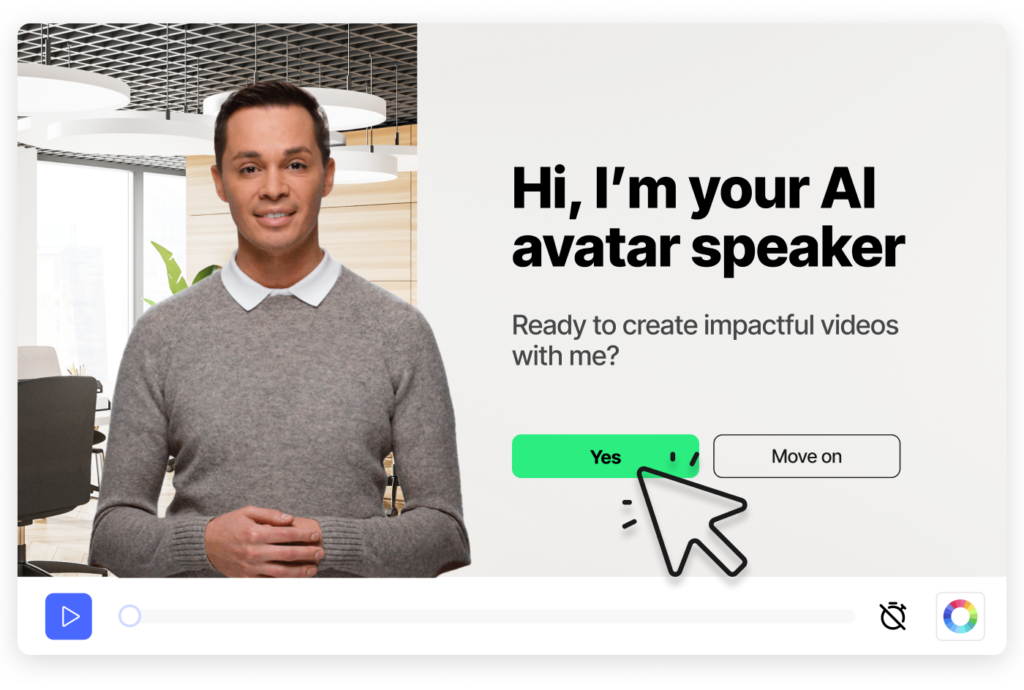
AI Voice and Video Avatar Platforms in 2026: A Pricing Benchmark for Founders and CTOs
A practical pricing breakdown of the five most-used AI voice and video avatar platforms — Bland AI, Retell AI, HeyGen, Synthesia, and Tavus — based on RudraX's vendor benchmarking work. What you actually pay, what you don't see in the public pricing page, and how to choose the right one for your use case.
9 min read

Why Your Business Is Failing — Part 1: Sales & Marketing
Your sales team is competing against an opponent that doesn't sleep. Part 1 of a 4-part series on the functions where AI agents are quietly eating mid-market margin — starting with the one that hits revenue first.
9 min read

Why Your Business Is Failing — Part 2: Operations
The operations cost base most CEOs can't see is the operations cost base bleeding the most margin. Part 2 of 4 — covering tier-1 support, back-office automation, and the customer onboarding gap.
10 min read